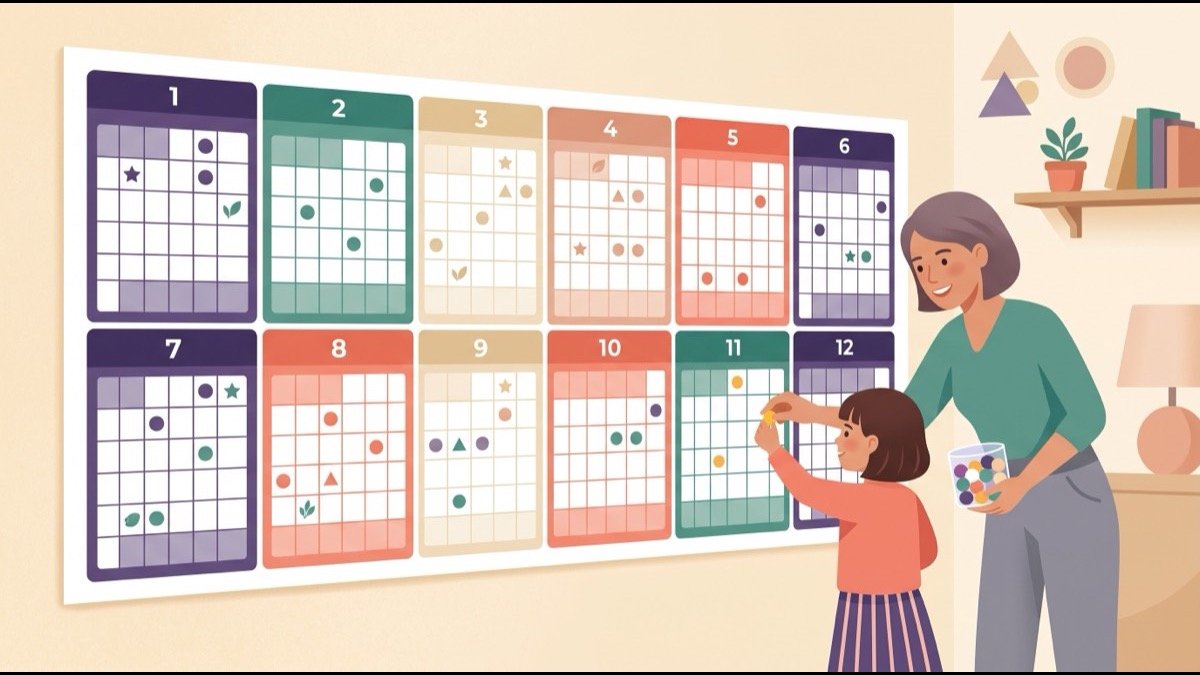
If your child is likely to sit an 11+ exam in 2027, you do not need to turn Year 5 into one long entrance test. You do need a plan that gradually moves from foundations to timed performance while leaving room for school, reading, hobbies and ordinary family life.
Exact test dates and registration arrangements vary by region and school, so treat this as a preparation framework rather than an admissions calendar. Confirm current deadlines and exam formats directly with your target schools or local authority.
September to October 2026: find the target and establish a baseline
Start by identifying the schools you may realistically consider and the exams they use. Then check the child's starting point across English, Maths, Verbal Reasoning and Non-Verbal Reasoning.
The goal is not to predict a pass. It is to answer practical questions: Are times tables instant? Is reading comprehension accurate? Are verbal and non-verbal question types familiar? Can the child explain mistakes?
Build a simple weekly routine of three or four short sessions.
November to December: strengthen foundations
Use this period for core maths fluency, comprehension, vocabulary and the main reasoning methods. Do not rush to full mocks just because they feel more “11+”.
A strong December target is to have fewer basic gaps and a reliable correction habit. Keep an error log and revisit repeated mistakes before adding difficulty.
Over the Christmas break, maintain a light touch. Reading, games involving numbers and a couple of short practice sessions can be enough.
January to February 2027: increase breadth
Begin mixing topics more often. A child who can solve fractions when told “today is fractions day” must also recognise a fraction problem inside a mixed paper.
Introduce short timed sets, but keep accuracy as the priority. If timing destroys the method, reduce the pressure and rebuild.
This is also a sensible time to visit school websites, read admissions policies and note upcoming registration windows or open events.
March to April: practise switching between skills
The exam will not politely group every weakness into a lesson. Use mixed papers, multi-skill English and Maths work, and reasoning sets that require the child to identify the question type quickly.
Sit an occasional timed mock to check stamina and pace. Review it properly afterwards: knowledge gap, misread or timing problem?
During the Easter break, aim for steady practice rather than a boot camp.
May to June: make timing feel normal
By now, your child should recognise the main formats they are likely to encounter. Increase timed practice and use centre-specific or region-appropriate mocks where available.
Timed practice is easier to sustain when the papers already come with marking schemes and answer sheets. 180 free timed mock papers
Teach practical exam habits: read instructions, mark answers carefully, skip and return when stuck, estimate time remaining, and check obvious errors without endlessly changing answers.
Do not let mock frequency crowd out targeted teaching.
July: consolidate before the summer
Review the year's error log. Which weaknesses have disappeared? Which still repeat? Choose a small number of summer priorities rather than “everything”.
If registration for your target exam falls around this period, make sure the administrative side is handled separately from revision. Missing a registration deadline cannot be fixed by a better maths score.
August: maintain, do not burn out
Keep practice regular but manageable. Use realistic timed papers, targeted worksheets and plenty of normal reading. Include genuine days off.
The aim is to arrive in September feeling familiar with the process, not sick of it.
The final weeks before the test
Shift from learning large new areas to consolidating familiar methods, repairing small weaknesses and rehearsing the real format. Sleep, breakfast, travel plans and calm routines now matter too.
Avoid dramatic last-minute changes. One difficult mock does not justify rewriting the entire plan.
Start by confirming the correct exam
EduArchives' exam guides explain the major 11+ formats and link preparation to the right style of practice.
Frequently asked questions
When should we register for the 2027 11+?
There is no single national date. Registration windows differ, so check the official 2027 admissions information for every school or consortium you are considering.
How many hours a week should a Year 5 child revise?
There is no magic number. A few focused, regular sessions with proper review are often more useful than long blocks completed resentfully.
When should we start full mocks?
Once the child knows the main skills and question formats. Too many early mocks can reveal gaps without providing enough time to teach them.