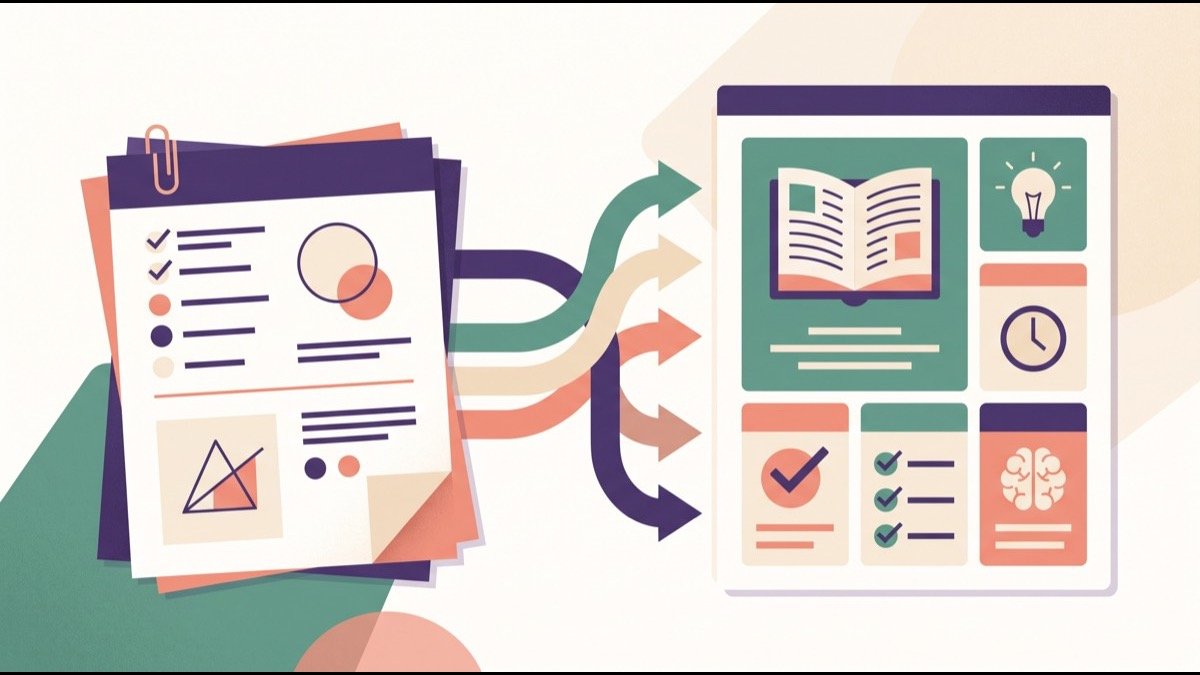
The most valuable part of a mock happens after the child finishes it. A score without analysis tells you what happened. A proper review tells you what to do next.
Use this five-step process to turn one paper into a focused week.
Step 1: record four headline measures
Write down:
- total score;
- subject scores;
- number of questions completed;
- time remaining or section where time ran out.
This prevents the total percentage from hiding a timing or subject issue.
Step 2: sort wrong answers
Label each important error:
Knowledge — concept or vocabulary not known.
Reading/process — method known but instruction, detail or step missed.
Timing — question unseen or rushed because time disappeared.
Answer transfer — response recorded incorrectly.
Now the result starts becoming a plan.
Step 3: count clusters
Do not react to every isolated wrong answer. Look for repeated patterns.
If four fractions questions are wrong, that is a priority. If one obscure vocabulary word is unknown, note it but do not redesign the week around it.
Choose the three clusters with the biggest likely mark return.
Step 4: assign a repair task to each cluster
Example:
Fractions: two targeted worksheets plus explanation of the method.
Comprehension inference: one passage focused on evidence and two short inference sets.
Timing: two ten-question timed bursts plus skip-and-return practice.
Each weakness should have an action, not merely a label.
Step 5: schedule a small re-test
At the end of the week, use a short mixed set or a comparable section to see whether the skill transfers.
Do not immediately repeat the exact same paper and celebrate a higher score caused by memory.
A sample seven-day plan
Monday: fraction repair.
Tuesday: comprehension inference.
Wednesday: rest or normal reading.
Thursday: timed reasoning set.
Friday: second fraction set.
Weekend: mixed re-test and error-log update.
The plan is short because it came from evidence.
Include one strength
Do not make the whole week a punishment tour of weaknesses. Include one area the child does well and keep it ticking over.
This also prevents strong subjects from quietly slipping while all attention goes elsewhere.
Compare like with like
When you next sit a mock, look for movement in the targeted areas. A different paper may be harder overall, so ask whether the specific skills improved as well as looking at the total.
If a particular school is on your list, a mock built to that centre's format keeps the comparison fair from one paper to the next. centre-specific mocks for 52 grammar schools
Use the mock-to-worksheet loop
EduArchives makes this loop straightforward: sit a mock, identify the weakness, choose the relevant subject worksheet, then return to timed practice.
Repair with worksheets: worksheets
Frequently asked questions
Should we review every wrong answer immediately?
Review important mistakes, but avoid a two-hour post-mock lecture. Prioritise repeated and high-value errors.
How soon should we sit another full mock?
Give targeted practice enough time to work. The right interval depends on stage and exam proximity.
Should the child help choose next week's targets?
Yes. Involving them in identifying patterns can increase ownership and make corrections more memorable.