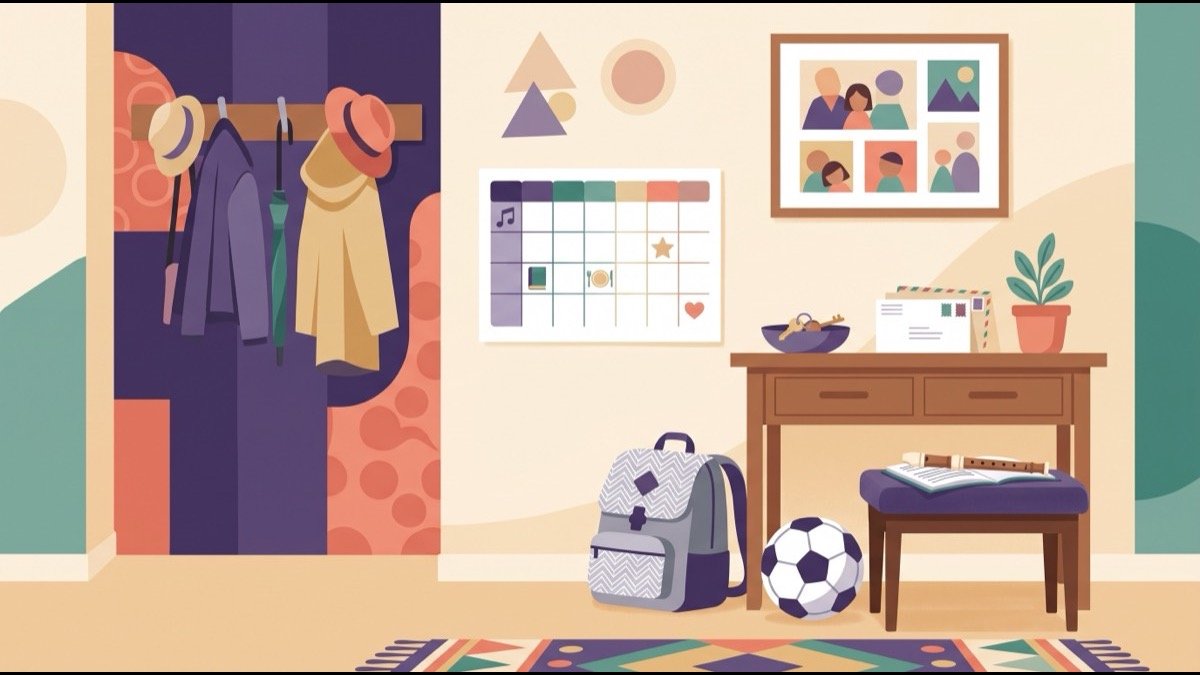
A workable 11+ plan has to survive real life. That means school homework, football, music lessons, birthday parties, tired Thursdays and weekends when nobody wants another worksheet on the kitchen table.
The solution is not to remove everything your child enjoys. It is to make preparation small enough to fit around the life they already have.
Start with fixed commitments
Put school hours, clubs, travel, family commitments and bedtime on the calendar first. Then look for three or four realistic revision windows.
Do not begin with “we need five hours of 11+ a week” and force life around it. Begin with the spaces you genuinely have.
For many families, 15–30 minute sessions are easier to sustain than large blocks.
Give each session one job
A simple week might look like this:
If one of those slots is a timed session, a full paper gives it a clear shape and an honest score. free timed mock papers
Monday — 20 minutes: Maths weakness from the last mock.
Wednesday — 20 minutes: English comprehension or vocabulary.
Friday — 15 minutes: Verbal or Non-Verbal Reasoning.
Sunday — 30–45 minutes: Timed mixed practice, followed by correction.
The exact days do not matter. The clear purpose does.
Use “minimum, normal, stretch” sessions
Busy weeks are easier when your plan has three versions.
Minimum: ten focused minutes. Keep the habit alive.
Normal: twenty to thirty minutes on the planned skill.
Stretch: a full timed section or mock when the child has the energy and time.
This prevents one missed session from turning into “we have fallen behind, so now Sunday must be two hours”.
Rotate weak areas without neglecting strengths
Do not spend every session on the child's favourite subject because it feels easier. Equally, do not make every session the weakest subject, or revision can become associated with failure.
A good rhythm includes one confidence-building task and one stretch task across the week.
Make travel and waiting time useful — carefully
Ten minutes in the car before football is suitable for discussing vocabulary, mental arithmetic or verbal puzzles. It is not ideal for a demanding comprehension passage that needs quiet concentration.
Match portable practice to the environment instead of trying to turn every spare minute into a classroom.
Children also need unscheduled time.
Protect one revision-free day
A weekly day with no 11+ can reduce resistance and make the plan feel finite. This is especially important when school workload rises.
The purpose of preparation is to support the child, not create the impression that every free moment belongs to an entrance exam.
Review the timetable once a month
If Wednesday sessions consistently fail because everybody is exhausted, move them. A timetable is a tool, not a moral commitment.
Ask: Which sessions actually happen? Which produce good concentration? What can we remove?
Keep resources ready
A surprising amount of revision time is lost choosing what to do. Bookmark the worksheet library, decide the topic beforehand and keep a pencil and timer in the same place.
EduArchives worksheets can be filtered by subject and difficulty, which makes a short session easier to start.
Pick this week's practice →
Frequently asked questions
Is three sessions a week enough?
It can be a useful routine, depending on the child's starting point and how focused the sessions are. Quality and review matter as much as frequency.
Should we drop clubs during 11+ preparation?
Usually there is no need to remove every activity. Exercise, friendships and enjoyable routines can support wellbeing. Adjust only where the overall schedule is genuinely overloaded.
What if we miss a week?
Resume normally. Avoid punishment catch-up sessions. Identify the most important next task and restart from there.