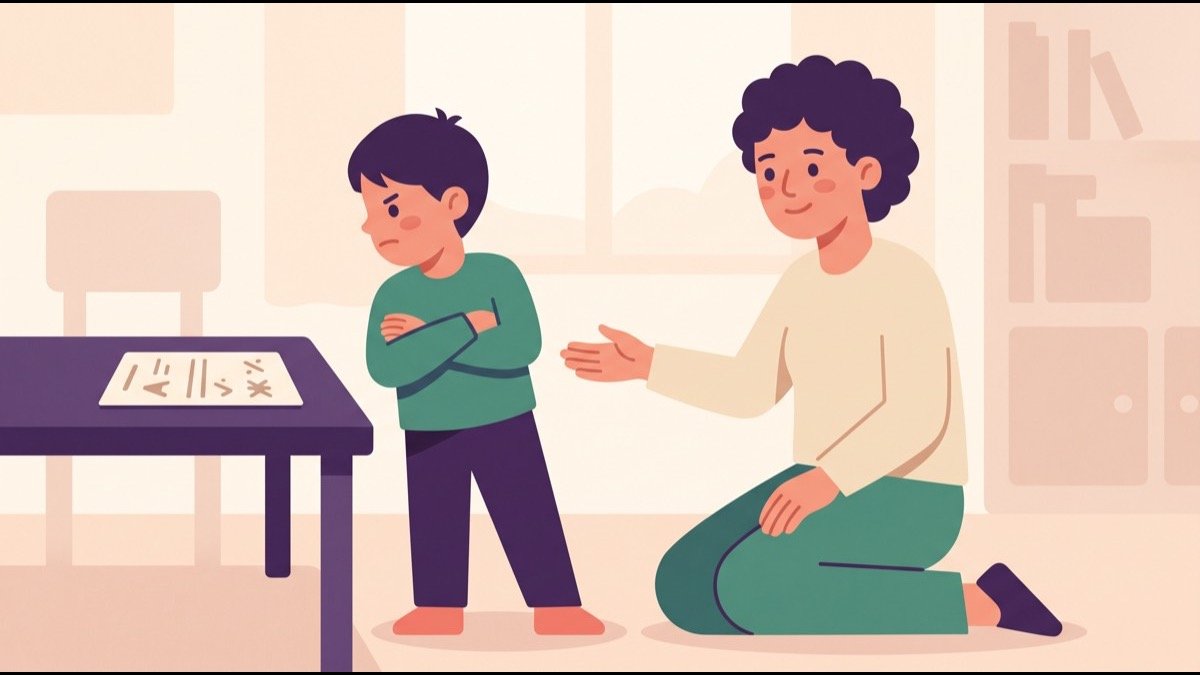
When an 11+ worksheet ends with shouting, tears or a child hiding the pencil case, the answer is rarely “add another worksheet”. Resistance is information. Something about the task, timing, pressure or purpose is not working.
That does not mean you abandon every goal at the first complaint. It means the routine needs diagnosing just as carefully as a weak maths topic.
Find out what “I hate it” actually means
A child may dislike practice because it is too difficult, too long, badly timed, repetitive or associated with constant score conversations.
Ask a specific question later, when nobody is angry: “Which part is worst — starting, not knowing answers, being timed, or how long it takes?”
The answer can change the solution.
Make the starting line smaller
“Do an hour of 11+” is a heavy instruction. “Do ten questions, then we stop” is concrete.
Start with a task small enough that the child can succeed in beginning. Once a routine becomes normal, duration can grow when needed.
A ten-minute session completed calmly is more valuable than forty minutes spent negotiating.
Give limited choice
Children often cooperate better when they have some control. Offer two useful options: “Maths or verbal reasoning first?” “Gaming Mode or Focus Mode?” “Now or after your snack?”
This is different from asking whether any practice will happen at all.
Separate correction from criticism
A wrong answer is not evidence that a child “wasn't concentrating” or “should know this by now”. Treat it as a puzzle: What did you think the question meant? Where did the method change?
Praise useful behaviours — checking, trying again, explaining a method — rather than only high scores.
Watch the family language around the exam
Children notice when adults talk constantly about “getting in”, comparing schools, other children's tutors and predicted scores. The exam can begin to feel like a judgement of the child's worth.
Keep the message proportionate: this is one opportunity, preparation helps, and a school place is not a measure of intelligence or family pride.
Change the mode, not just the subject
If paper worksheets have become stale, use interactive practice. If screen time is becoming distracting, switch back to a short printed set. Variety can restore attention without changing the learning goal.
If paper practice has gone stale, swap in a short printed set from a different subject and keep the session under fifteen minutes. free 11+ worksheets by subject and tier
Quest Arena offers Gaming Mode for lighter practice and Focus Mode for a cleaner exam-style experience, so the child can practise similar skills in different ways.
Build an end point the child can trust
If you say 20 minutes, stop at 20 minutes. Constantly extending a session because “you are doing well” teaches the child that starting practice has no reliable finish.
Use a timer, define the task and honour the boundary.
When resistance is a bigger signal
Persistent distress, sleep problems, frequent physical complaints or extreme anxiety deserve more attention than a motivation trick. Reduce pressure and consider speaking with the child's school or an appropriate professional if you are concerned about wellbeing.
The 11+ should never become more important than the child taking it.
Try a different practice experience
EduArchives Quest Arena is designed to give children both focused exam-style practice and a more game-like route into questions. If the current routine has gone stale, changing the format may help.
Frequently asked questions
Should I reward my child for 11+ practice?
Small rewards for consistency can work, but avoid making every score a transaction. Praise effort, routines and thoughtful correction too.
What if my child simply does not want to sit the 11+?
Listen carefully. Families should consider the child's wellbeing, the realistic school options and whether the process remains appropriate. Preparation should not override significant distress.
Is gamified practice still “real” revision?
It can be, provided the questions are educational and the child also develops the focus needed for the real test. Different modes can serve different stages.