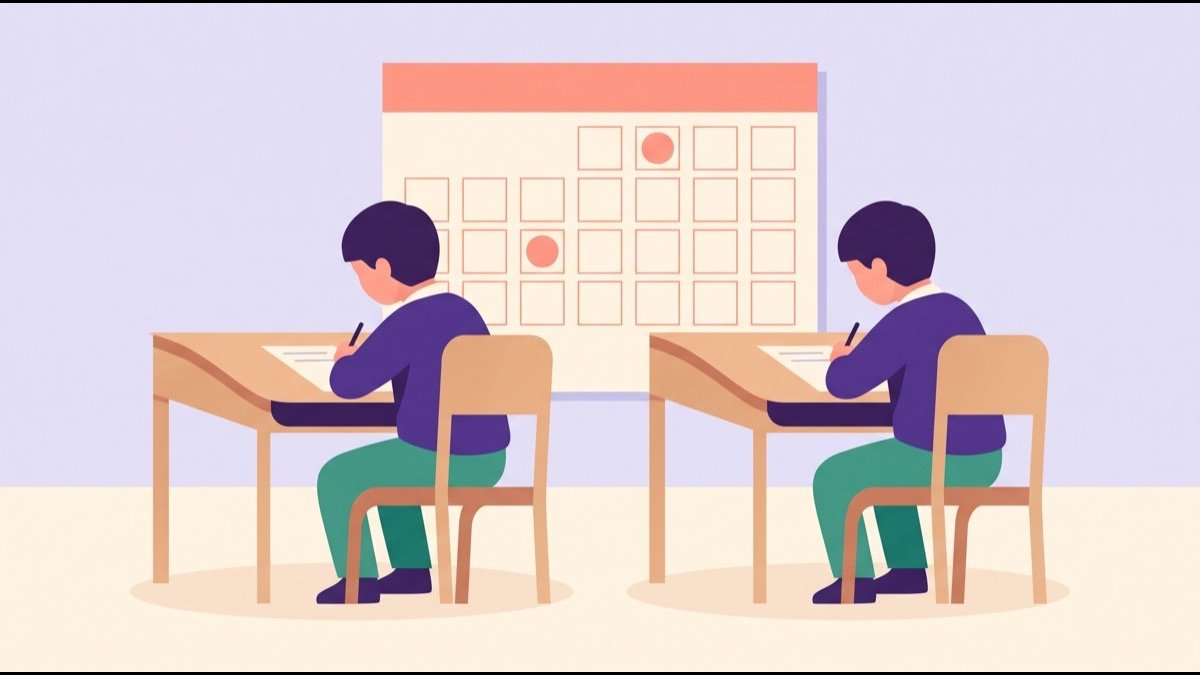
Yes, families may be able to register a child for more than one selective entrance test when considering schools in different areas or separate admissions systems. But there is no universal entitlement or one result that automatically travels everywhere.
Each exam has its own rules.
Why families sit multiple tests
A family may live near the border of two selective areas, be considering a move, or have several independent and grammar-school options. Different schools can belong to different consortia or use different assessments.
Sitting more than one test can broaden options, but it also adds administration, travel and pressure.
Registration is usually separate
Do not assume that registering for one regional test covers neighbouring schools. For every target school, confirm:
- which test is used;
- who runs registration;
- the deadline;
- eligibility rules;
- test date and location;
- how the result is used in admissions.
Keep a separate checklist for each system.
The exam formats may differ
One test may be multiple-choice across several subjects; another may use bespoke English and Maths papers; an independent school may use an online pre-test or its own assessment.
Preparation should therefore contain common foundations plus format-specific rehearsal.
Do not make a child learn two completely different “tricks”. Strong reading, Maths and reasoning transfer across tests; timing and answer format need specific practice.
Check for date clashes
Selective tests can occur close together. Families should confirm dates early and understand the official policy if a child cannot attend a scheduled session.
Registration windows and test dates differ by area, so keep every deadline in one place from the start. key 11+ registration and exam dates
Never assume an alternative date will be offered for a voluntary clash.
Consider the child's load
More options are not automatically better. Multiple tests can mean repeated travel, uncertainty and several high-pressure weekends.
Ask whether every school is a genuine option. If you would never accept a place because the commute is unrealistic, sitting the test may add stress without adding a meaningful choice.
Keep school applications separate
Even after sitting multiple tests, families normally still need to follow the relevant school-application process and deadlines. Test registration does not necessarily place a school on the local-authority preference form.
Build a common-core preparation plan
Spend most time on transferable skills: arithmetic, problem solving, comprehension, vocabulary and reasoning. Then add a smaller layer of test-specific work for each format.
EduArchives exam guides and centre-specific mocks can help families distinguish the common skills from the individual paper style.
Find centre-specific mocks: centre mocks
Frequently asked questions
Can the same 11+ score be used for several schools?
Sometimes schools share a test or consortium, but not always. Check each school's admissions arrangements.
Is sitting several 11+ exams bad for a child?
Not inherently, but the workload and emotional pressure should be considered. Only sit tests connected to realistic school choices.
Do we need separate preparation for every test?
Build strong common foundations, then practise the timing, answer style and distinctive sections of each actual exam.