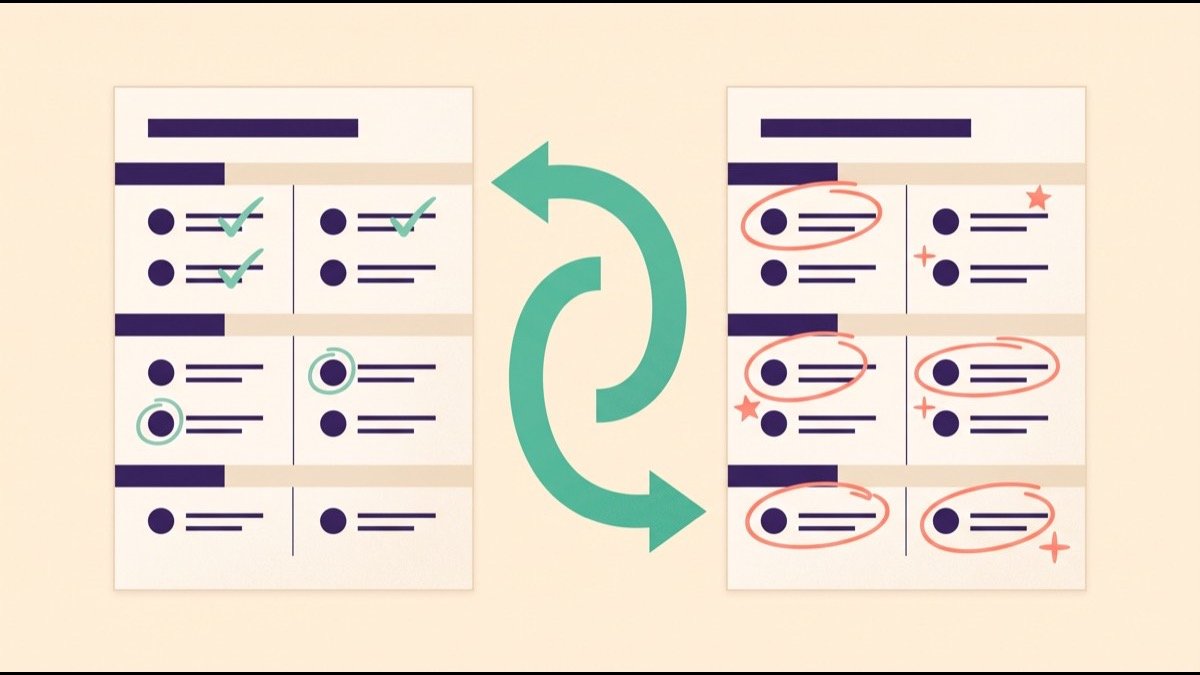
One difficult question can damage far more than one mark. A child spends four minutes refusing to leave it, becomes anxious, then rushes several easier questions at the end.
A two-pass strategy is designed to stop that chain reaction. The principle is simple: on the first pass, collect the questions you can answer efficiently. On the second, use remaining time on the tougher ones.
The method must fit the exact exam format and official instructions, but the underlying time-management habit is widely useful.
What happens on Pass One?
The child works through the paper in order but does not allow one stubborn question to dominate the section.
If they understand how to start, they solve it. If they are genuinely stuck after a sensible attempt, they move on and return later if the paper rules and timing allow.
This protects accessible marks further down the paper.
What happens on Pass Two?
After reaching the end, the child returns to skipped or uncertain questions. Now there is a clearer picture of remaining time.
A difficult question can receive more attention without threatening twenty unseen questions.
How long should a child spend before moving on?
There is no universal 60-second rule. A long comprehension question deserves more time than a short verbal-reasoning item. Use the paper's total timing to create a rough pace during practice.
Teach the child to recognise no progress. If they have reread the same line three times and still do not know how to start, moving on is a decision, not a defeat.
Make skipped questions easy to find
Use whatever marking method is permitted on the practice paper and consistent with the real exam. A small clear mark beside a question can help the child return quickly.
Centre-specific mocks reproduce the answer sheet and timing of a named school, so skip-and-return practice matches the real paper. centre-specific mocks
If a separate answer sheet is used, take extra care not to shift the answer rows after a skipped question.
Why strong pupils need this too
High-achieving children can be especially reluctant to leave a question because they expect to solve everything. That perfectionism can become expensive under time pressure.
The exam rewards total marks, not heroic persistence on Question 17.
Practise the strategy before it matters
Do not introduce two-pass working on exam morning. Use timed sets where the child deliberately skips one difficult question, reaches the end and returns.
Afterwards, ask whether the strategy increased completion and reduced panic.
If the child becomes more confused by constant skipping, simplify the method. A strategy should reduce cognitive load, not add another thing to remember.
Combine it with sensible checking
On the second pass, prioritise genuinely unanswered questions before endlessly rechecking answers that were already secure. If time remains after that, scan for blanks, answer-sheet mistakes and obvious misreads.
Rehearse on timed papers
EduArchives mocks give children a safe place to practise skip-and-return decisions until they become normal rather than dramatic.
Frequently asked questions
Is skipping a question the same as giving up?
No. It is a time-management choice. Returning later may make the question easier once the immediate pressure has gone.
Should a child do the easiest questions first out of order?
Usually it is simpler to work through the paper in order and move on when stuck. Jumping around too much can increase answer-sheet errors.
What if the test software does not allow easy return?
Follow the exact rules of the current test. Practise using the real navigation style where familiarisation materials are available.